"Paisa manga tho meri 'Party' naraj hogi" – Debtor collection challenges faced by MSME owners
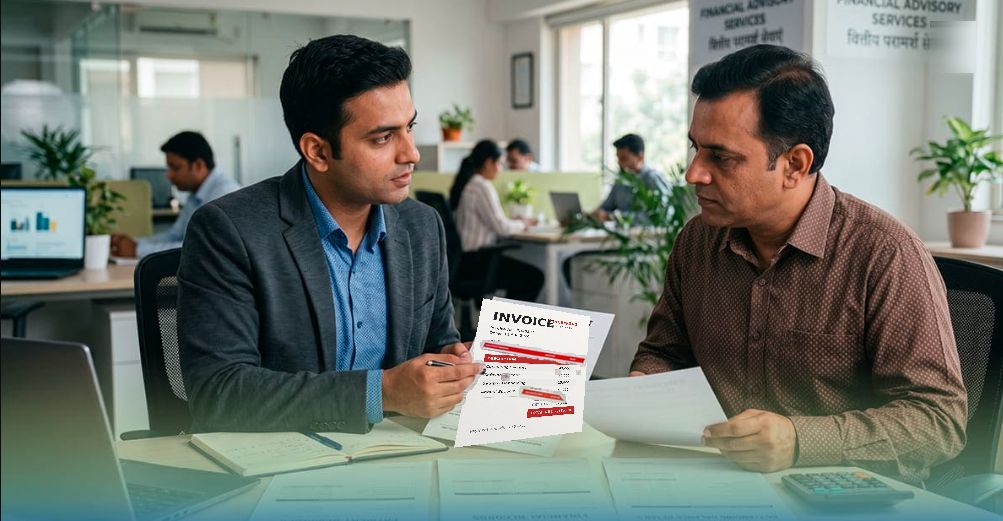
Sharing a real-life experience: A company from South Mumbai delayed our invoice by more than 6 months. The amount of the invoice was around ₹96,000. We used the MSME portal for recovery and we received the money in the next 4 working days. However, we lost that client forever. When you use the MSME portal for recovery, it's almost equivalent to losing that client for sure. Clients take it as a legal notice and they stop working with that MSME vendor.
Every business owner I talk to has some version of the same story.
There's a customer. A good one. Been buying from you for two, three years. Orders are regular, margins are fine, and honestly, you like the guy. And right now he owes you ₹4.2 lakh that was due 40 days ago.
So what do you actually do about it?
Nothing, mostly. That's the honest answer. You send a soft "hey, just checking in" on WhatsApp and he leaves it on blue tick. You tell your accountant "leave it, he's good for it." You wait. And then payroll's due, your own supplier is calling you now, and you end up borrowing at 18% to cover a hole that only exists because somebody else is sitting on your money.
Nobody warns you about this part when you start a business. Collecting from debtors isn't really a finance problem. It's a relationship problem in a finance costume. And most of the tools built for it completely miss that.
"Just send more reminders" is terrible advice
Seriously, it is. Send an email. Send another one. Get firm. Send a legal notice. As if the relationship you spent three years building just evaporates the second a payment runs late.
Here's what I keep coming back to. The businesses that are actually good at getting their money back aren't the ones chasing the hardest. They're the ones chasing consistently, early, and without any emotion in it. But a small MSME owner can't do that. He's got fifteen debtors, no collections person, and a personal equation with every one of them. Of course there's emotion. And of course he's not consistent — he's busy running the actual business.
That gap, between how disciplined collection is supposed to work and what a stretched-thin owner can actually pull off, is exactly where the money leaks out.
What actually moves the needle
I've spent a while building products in fintech, and the thing that works isn't more pressure. It's getting the owner out of the awkward part of the loop, without wrecking the relationship in the process.
Think about how a big company does this. There's a system. Reminders go out on day 3, day 7, day 15 — automatic, polite, same rhythm every time. Nobody on the customer's side takes it personally, because it's obviously just process, not some personal accusation. The relationship survives because a machine did the chasing, not a guy who's now going to feel weird about it at the next meeting.
Small businesses have just never had that machine. It didn't exist at their size, or their budget. Until recently.
That's basically the whole reason FinClick 360 exists. Let me walk through what that machine looks like when you build it for an actual MSME instead of a corporate finance team.
Reminders that go out on their own, on the channel the customer actually reads
An email? Easy to ignore. A WhatsApp with the outstanding amount, the invoice number, and a payment link, sitting right there in the app he opens forty times a day? Much harder. And SMS for the guy who isn't really on WhatsApp.
This isn't about spamming anyone. It's about showing up calmly and predictably where that person actually looks, so it lands like a system doing its thing and not you personally nagging. Email for the paper trail. WhatsApp for the nudge that actually gets seen. SMS as the backup that reaches everyone. And the whole rhythm just... runs on its own.
Some debtors just don't read messages. They need a voice on the phone. A soft, beautiful voice-calling AI lady speaking in Hindi and English both can do wonders compared to a human collections call which is expensive, awkward, and for a small owner, genuinely uncomfortable to make to someone you're friendly with. An AI voice call that politely confirms the amount, asks when you can expect payment, and logs whatever they say — that takes the whole cringey interaction off your plate. Firm, but not personal. And it does all fifteen debtors without you having to psych yourself up fifteen separate times.
The relationship stays clean because you never had to be the bad guy. The system was.
Real-time sync with Tally is what makes the whole thing honest
Most MSMEs in India run on Tally. It's the source of truth, full stop. The problem is everything around Tally has always been this manual export-import mess — you pull a report, paste it somewhere, and it's already a week old by the time you're looking at it. So the reminder goes out for the wrong amount. Or worse, it goes to a customer who actually paid yesterday, and now you look sloppy.
Real-time sync with Tally is what makes the whole thing honest. Reminders fire against the actual outstanding right now, not last Tuesday's snapshot. Payment lands? That debtor quietly drops out of the chase — nobody gets pinged for money they already sent. The ledger the customer sees matches your books because it literally is your books.
It's not a flashy feature. It's just plumbing. But it's the plumbing that makes every reminder, every call, every shared invoice actually trustworthy. No double entry, no "hang on, let me update the sheet first." The books stay where you already keep them, and the collection engine just runs on top of the live data.
The actual point
The whole bet behind FinClick 360 is that this was never a real trade-off in the first place. It was just a tooling gap. Give a small business the same disciplined, automatic, no-emotion collection machine the big guys have always had — running on live Tally data so it's never wrong — and the choice just disappears. You get your money and you keep the guy you golf with.
And when working capital is the thing standing between growing and just surviving, that's not a nice-to-have. That's the whole game.
Take the entire pain off your shoulders for just ₹750/month
That is the price of two Starbucks coffees today. Connect with us for a no-commitment demo and see the collection engine in action.